Entry 53 — Christmas Poem by Ted Warnell
Wednesday, May 26th, 2010
Friday, May 21st, 2010
I simply disconnected from my blog–just didn’t think of it for about a week until a day or two ago. Then last night for some reason I started thinking about haiku and came up with the following poems that I thought worth making this entry for:
.
. early April night:
. barely a single haiku
. of moonlight in it
.
. the street’s cherry blooms,
. dazzling, yet almost grey
. besides the haiku’s
.
.
.
.
.
Wednesday, December 23rd, 2009
Today’s entry is a repeat of one from Christmas day, 2005, with a few comments from today at the end of it:
25 December 2005: “clenched sky.” That’s one of the scraps in the notebook yesterday’s entry was about. Circa 1983. Never got into any poem of mine but may yet. Another scrap is the start in fading cursive of a sonnet I completed somewhere else on Dylan Thomas. I was momentarily quite taken by what the word, “steepled” did to its fifth line, “by his construction of a steepled truth,” for it took a while for me to realize the word was not “stupid.”
Other highlights include the following five unpublished haiku:
rain now as loud
against the northern side of the house
as the roof
rotting log
only part of forest floor
to show through melting snow
glimpsed tanned shoulder;
thin white string across it,
tied like a shoelace
bikini-bar dancer
showing off to her boy-friend,
me in between them
far enough from the storm
nearing the color-dotted beach
to see above it
I wrote these about the time I pretty much stopped writing conventional haiku. I quite like the storm one, probably because I still vividly remember the first Florida storm I saw from far enough away to see above–and to both sides–of it. I don’t think it’s a truly outstanding haiku, though. The one about the bikini dancer is fair in the wry sardonicism vein, I think. The one about the bikini string is nearly not a haiku, for it doesn’t really provide any haiku contrast; i.e., it’s a single-image description. On second thought, maybe it’s excitement versus the mundane: girl in bikini versus shoelace.
I dunno. The other two are very standard, but I’ve tried to improve them,anyway:
the rain now louder
against the house’s north side
than on the roof
rotting log:
only portion of the forest floor
to show through the snow
The first is slightly haikuish in the way it obliquely discusses a wind; the second re-uses a very over-done haiku theme, to wit: life goes on, or–more specifically–winter snow won’t win; but the theme is slightly warped toward freshness with the use of something a reader will take to represent a cohort of winter rather than a counter to it, until he realizes the cause of rotting.
Also in the notebook this bit of High Sagacity: “The Eastern Wise Man attempts to reduce his awareness to the size of his experience; the Western Wise Man attempts to increase the size of his experience to the size of his awareness.” Yep, I’ve always been Eurochauvinistic.
From today:
rotting log;
nothing else of the forest floor
showing through the snow.
Sunday, November 29th, 2009
#652 had some gadgets by Richard Kostelanetz that I thought fun but trivial–4-letter words in squares, one letter in each quadrant. The gimmick is that three of the letters, in upper-case, spell a word that becomes a second word with the addition of the fourth (lower-case) letter, as in
. G O
. o D
The anti-gimmick is the fact that very few of the too words disconcealed in each specimen relate enough to each other to achieve metaphoricality, or anything poetic else. The above is the best one I could find among the bunch he sent me (and others of his literary friends). Another problem is that such words are too easy to find–although I applaud Kosti for bringing their existence to our attention because they do provide word-game fun.
Several nice poems in #653 that I got from the June 2005 issue of Haiku Canada Newsletter, including this, by John M. Bennett:
. Clou
. laem
. foam
. d
and these two haiku gems, the first by Cor van den Heuvel, the second by Grant Savage:
. end of August-- . a crinkled elm-leaf falls . and rocks once
. on the park bench . this spring afternoon . a new old man
#654 featured wonderful pwoermds from LeRoy Gorman like “marshush,” “rainforust” and “riverb”; but I complained that powermds as pwoermds rather than as climaxes in longer lyrics had become boring for me. I returned to my quest for a decent word to represent “partaker of artwork” in 655, reporting that I’d just coined “aesthimbiber” for that purpose. I seem to have dumped it soon after that but think I should not have. I like it right now.
After posting two works of J. Michael Mollohan in #656, which I put on display in yesterday’s entry, I discussed them in my next two entries. A few lazy autobiographical paragraphs on my procrastination followed. This set of ten entries (from a zine called Dirt) ended with an example of what can be done with pwoermds used as I’d like to see them used, as parts of longer poems:
Ight nowhere lignt gnight lightninght thwords now here
It’s by none other than Geof Huth, who calls it “A Series of Pwoermds.”
Tuesday, November 24th, 2009
Today was another bad day for me (because both my bikes had flat tires so I had to walk to where I had an MRI for my bad back, then walk to the bicycle shop two miles from there to get tubes before going on home, another two miles, so I’m just going to post one entry from my old blog, #631, in its entirety–because it’s one of my best entries for the general poetry public, I think:
24 October 2005: Well, we lost electricity in my neighborhood for seven or eight hours due to Wilma, but we got through it with minimal damage. Naples, to the south, didn’t do so well. Sad for them, but someone had to lose–and one good thing about the outcome is that the weather people seem to have been on top of things all the way through, which is certainly reassuring. In my ideal world there’d be hurricanes–but the land to persons ratio would be so high no one would have to live anywhere near places like Naples. There’d still be places like Naples, but they would be staffed by commuters, and lived in by vacationers. (Down with over-population–which in my book is anything over ten million–for the whole world.)
Okay, the poetry-related subject of this entry is the following poem:
. 2 children’s
. rained-around dry quiet spot
. within forsythia
This, or something like it, was in my first book, poemns. After selling some of the copies of the book, I found something wrong with one of the other three poems on the sheet it was on, so removed the whole sheet from the remaining copies of the book. I think the printers failed to make a line in one of the poems go off the edge of the page as I’d intended it to. I should have a copy of the four poems somewhere but it’d take me a week to find them if I tried to, I’m sure.
I’ve used this poem elsewhere since the book, I believe. I want to discuss it here cbecause I consider it a near-perfect example of what I try for as a poet, which is simply to render, in as few words as possible, an image that will cause others as much pleasure as possible. This one accomplishes this through its (1) subject matter, which is (a) quotidianly likely to elicit most persons’ sympathy, (b) pretty, children generally coming off as cute, and forsythia as beautiful, (c) peaceful, the rain having to be little more than mist not to be getting through forsythia branches, and, most important, (d) archetypally resonant by representing Shelter and Companionship, as well as Spring (rain and forsythia, and human beings in their spring); and its diction, which includes the wonderful rained/round rim thyme (but, not, I’m sure that’s not original with me), the with/syth near-=rhyme and the dry/qui aft-rhyme (or whatever it is I’m calling traditional rhymes). Only now, by the way, did I realize that the latter rhymes were near- or full-rhymes. The poem is also effectively concise, and it draws on its being a haiku, for that adds haiku-depth to it (via what it picks up from the tradition, and all haiku before–and after–it).
To me, one of its points of greatest interest is in what it does not have, mainly, manywhere-at-once, or equaphorical layering. In a way, this is a virtue, for it clarifies it into a moment of particular intensity. Amusingly, that emphasizes its being a pure haiku–albeit one without quite the right syllable-count. I do consider its lack of equaphors (or metaphors and the like), in the final analysis, a defect. I continue to believe the very best poems express two or more simultaneous images. But poetry as a whole would suffer consequentially if every poem were equaphorical.
Real life did inspire the poet, by the way. The forsythia in it is from the yard of the Hyde House, as it was known, on Harbor View Island in Norwalk, Connecticut, that I lived in between the ages of 7 and 12. It actually formed a sort of hut, though I’m not sure they could have kept out even mist. I played in it from time to time but most remember my sister Louise, a year younger than I, playing some kind of queen’s court game in it with her friends Ellen and Cindy.
Ironically, just the other day I learned that the Hyde House I’ve been reminiscing about is no more. It was leveled to make way for two condominiums that have to be devastating the ambiance of the shabby-genteel little clump of mostly vacation homes on the island. Progress triumphs again.
note: the large print is stupid, but I’m using it to indicate large blocks of quoted material because I haven’t been able to figure out how to indent at this site (other than use periods as with the poem quoted within my quote–which would take too long to get right for long prose passages).
Tuesday, November 10th, 2009
I have always wondered why anyone would make much of most Dada works. It was evident that a good number of reasonably intelligent, sensitive people have, though. Including friends of mine who have shown themselves quite capable of fashioning works I think vastly superior to their Dada works.
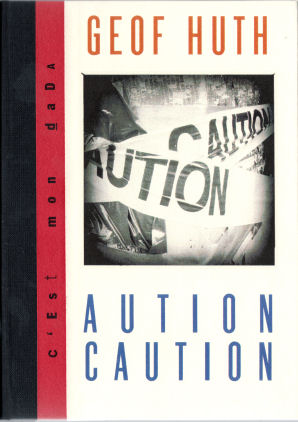
Then I came upon Geof Huth’s
. the car I didn’t notice isn’t there
in the recentest issue of Haiku Canada Review. Not Dada, but certainly nonsense, or so I at first thought. I would now term it nearsense. As
. the crab boils filge at blargets in the goamy fludge
it would have been nonsense, or a literary work which uses irrational language in order to amuse (in the view of most knowledgeable people encountering it). As
. car didn’t (e time)s into bleep blegg bllllg you
it would be constersense, or a literary work whose textual matter seems chosen for no other purpose than to cause consternation–by seeming to be nearsense but ultimately not making sense, or proving amusing.
Then there’s temporary nonsense such as Joyce’s “cropse,” which at first seems either nonsense or constersense (and will always seem constersense to Philistines) but, given time, will quite rationally if poetically say “corpse” and “crops” simultaneously in succinctly sum up all the important cycles of human existence.
I have more to say about this, particularly about why the poem by Geof Huth is nearsense, but I’m too worn-out from another tiring day to do so until (I hope) tomorrow.
In #663, I presented my Odysseus Suite–but the reproduction is too crude for me to re-post it here. My next entry featured this, by Endwar:
As I announced when I first posted this, I am hoping to publish an anthology of mathematical poems, like this one, so if you have one or know of one, send me a copy of it, or tell me about it.
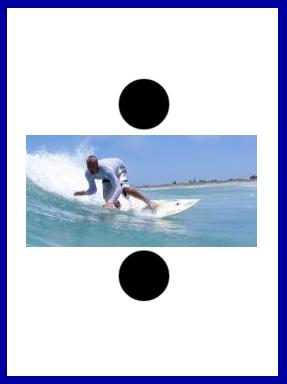
#665 had this by Marton Koppany, which I have to post here because it was dedicated to ME:

Hey, it’s mathematical, too. The next entry, whose number I fear to state, concerned this:

This is from Typewriter Poems, an anthology published by Something Else Press and Second Aeon back in 1972. It’s by Alison Bielski, An English woman born in 1925 whose work I’m unfamiliar with. I find this specimen a charmer . . . but am not sure what to make of it. Three lines, as in the classic haiku. The middle one is some sort of filter. Is “n” the “n” in so much mathematics? If so, what’s the poem saying? And where does the night and stars Hard for me not to assume come in? Pure mathematics below, a sort of practical mathematics above? That idea would work better for me if the n’s were in the lower group rather than in the other. Rather reluctantly, I have to conclude the poem is just a texteme design. I hope someone more clever sets me right, though. (I’m pretty sure I’ve seen later visio-textual works using the same filter idea–or whatever the the combination of +’s. =’s and n’s is, but can’t remember any details.)
It was back to my lifelong search for a word meaning “partaker of artwork” in #667–but I now believe “aesthimbiber,” which I thought of in a post earlier than #667, I believe, but dropped, may be the winner of my search.
Next entry topic was about what visual poets might do to capture a bigger audience. I said nothing worth reposting on a topic going nowhere because visual poets, in general, are downright inimical to doing anything as base as trying to increase their audience. One suggestion I had was to post canonical poems along with visual poems inspired by them, which I mention because in my next entry, I did just that, posting a Wordsworth sonnet and a visual poem I did based on and quoting part of it–and don’t re-post here because of space limitations. I wrote about the two in the final entry in this set of ten old blog entries.
Tags: minimalist poetry
Thursday, June 6th, 2013
My first thoughts about the artworks in Nina Katchadourian’s “Special Collections Revisited” series, was that it was just another instance of found art, pedestrianly-done. True, there are many visual poets doing much more inspired art but not getting it into New York galleries–or the Akron Art Museum that Katchadourian’s series got into. But on reflection (nudged by a note I got from Tim Willette) I applaud Katchadourian for her choice of books as subject-matter, specifically book-titles. Certainly it’s hard for one encountering them not to do more with them than can be done with the dead-headedly politically-predictable aphorisms that made Holzer famous.
The following, a wry take on foundness in culture by Tim Willette, which Tim wrote me “sprang from a Federal Circuit opinion in Springs Windows Fashions v. Novo Industries,” in which the second company used an invention of the first company “de novo” (i.e., “over again”), is an order of rank superior to Katchadourian’s juxtapositions, I think–because you don’t just see it, read it and agree or disagree with it, but see it, reflect on it,–and find it.
.
Monday, February 2nd, 2015
This morning, at 4:48 A.M., I turned 74. My Facebook Timeline is swamped with birthday greetings, which is very nice, but it bothers me that Mary Worth hasn’t yet wished me well on my day. The card below from Karl Kempton almost makes up for that, though:
I was delighted with this when I first looked at it. A gorgeous design, yes? After a moment with it, I realized that the message at the top was in code, and quickly decoded it, now doubly delighted, for I love codes. Moreover, this use of a code made Karl’s design not just a birthday card, but a veritable birthday poem! Karl had secreted his message in an underground that had allowed it to wend its way back into sight as little flowers, celebrating their secret message’s meaning! What’s more, the two lines of sheer garden swirled into a single, three-dimensional super-blossoming: I had been given a master-poem with three levels for my birthday.
.
Saturday, January 18th, 2014
The piece below is the fourteenth frame of Karl Kempton’s sequence, “Constellations,” which is from his Black Strokes White Spaces (Xerox Sutra, 1984), which is one of my favorites of his many books:.
This piece is composed, like all the works in Black Strokes White Spaces, of repetitions of a single typographical symbol. The symbol in this one is the comma, an ideal choice for so soothingly serene a nocturnal seascape, as I perceive it, at any rate) because of its verbal meaning as “pause here.” Consider, for instance, the commas’ slowing of the wave depicted. True, maybe what I’m calling a wave is something botanical. But I like the idea of an ocean wave in slow motion better than the idea of a plant slowed in a downward curl. . . . Karl would probably have made it in 1983, thirty years ago! It still works.
.
Friday, June 15th, 2012
“HA AM, 2,” My favorite work from Karl Kempton’s gorgeous sequence, Chewed, avantacular press, 2012:
.
.
Tuesday, December 13th, 2011
I wasn’t sure what to put in this entry, I’m so blah. Fortunately I remembered I had just gotten a package of poems from Karl Kempton, reflections, among which were many worthy of re-publication here, such as this:
mindless x ( ) = less mind
The origin poem for all the poems in the collection is “american basho”:
old pond
frog
splash
!
Too blah to give the collection the critique it merits, I’ll just say that it seems to me a zen meditation on . . . well, the zero/hole/opening/ letter o in Basho’s old pond, the latter representing the mind . . . unless it represents something beyond that. Karl and I have metaphysical differences, and sometimes I’m not too sure what he means, but his ideas are always worth thinking, or meta-thinking, about.
* * *
Monday, 12 December 2011, 2 P.M. Tough day. A routine visit to my general practitioner at 9:40. I’m doing fine according to the various tests I underwent a week ago. Then marketing followed by the delivery of “The Odysseus Suite” (signed by the artist!) to my friend Linda as a birthday present. After dropping off the frozen lasagna Linda had given me, and the things I’d bought at the supermarket at my house, I went off again to (1) deposit a check, (2) leave a framed copy of my “A Christmas Mathemaku” at the Arts & Humanities Council’s office, and buy some items at my drugstore. I was home by a little after one, too tired to do much. But I scanned the Carlyle Baker work I posted in yesterday’s blog entry to take care of daily blogging chore. Dropping the mathemaku off at the A&H Council office took care of the only other duty I’m still trying to take care of daily, my exhibition-related duty. Now for a nap, if I can manage to fall asleep.
.
Tuesday, June 10th, 2014
Apologies, but once again I forgot to make this public until now, 2 days late.
I don’t have much more to say about the Beach (!!, !!). Just that it makes me think of American Indians–the big M’s might be tepees, and the symbols Indian hierglyphics, although I have to say I know close to absolutely nothing about Indian writing, even if they had any. But there are also puffs of smoke language in the work.The main thing I get from the work is how strongly it signifies . . . something, but something difficult to pin down. The change from the stack of three instances of “OlM” (as I reduce it) to the swirl I found SMIW or SWIIM in seem especially meaningful–but why? From print to cursive? From solidity to a kind of organic. lazy, confused bolt of lightning?
Then there are the four domino 6’s. The way they slightly slant toward the right, the leftmost one, the most, suggests to me some kind of footprints across flat land meeting a horizon where a sign triply announcing the beach rises. The exclamation signs join in the perspective the 6’s are suggesting. Since a beach is shore, this also suggests a higher adventure than a day of sandcastle fun–a place to leave for discoveries!
The work’s aesthetic value is almost entirely visual, but its text and near-text make it more than a scene–a scene within an attempt to translate it into words–i.e., a scene and something trying to be said about the scene that locates it, according to my long-held central view of poetry’s main goal, in a Manywhere-at-Once consisting of places in both the visual and linguistic parts of an observer’s brain causing a tension the resolution the challenge of which is what gives the work its main zing. Possibly no two persons coming to it will get the same details from it, but everyone experiencing a superior appreciation of it will end in the same Manywhere-at-Once.
.
Monday, June 9th, 2014
Here’s the comment I made about the above at Tip of the Knife yesterday: “Another great issue, Bill. I was taken with Ali’s “Stop! It’s the beach. An Asemic Writing,” too. In fact, I stole it for re-use at my blog. I like your take on it: mine so far is very nebulous, but I also see the same theme there as you. I think of Klee–especially the way a merely nice picture takes off because of its title!”
I have even more to say about it today because shortly after I wrote yesterday’s blog entry, and categorized this work as a “textual design,” I saw the word, “swim,” could be made of the lettersstacked to the right, which have extra M’s to their left. There are one or two extra S’s, too. So we have the very appropriate, “swimmmms” . . . So it’s a visual poem.
I almost see it as a mathematical poem, too–because of how much it looks like an addition example. All it needs is a plus sign.
I’m pacing myself in this analysis. Don’t want to tire myself out. So I’ll return for more Masterful Insights tomorrow.
.
Sunday, June 8th, 2014
The latest issue of Bill DiMichele’s always excellent netzine, Tip of the Knife, is out. Among my many favorites in it was this, by Ali Znaidi (who is new to me):
Stop! It’s the beach. An Asemic Writing
It swept Bill into “a seascape with shiny pebbles and beach umbrellas. There are sand castles rising from the shore, aiming for that Sunday blue sky above us all, for those playful children enjoying cotton candy and drawing pictures with driftwood.” Bill goes on the speak of loving “the soul Ali empties into the depths of the ocean, the swimmers riding peaceful currents, doing a high dive, dallying with mermaids among their coral language homes,” and I know just what he means, although the details of my interpretation of this multi-interpretable work differ from his. The work is clearly an inspired celebration of the beach as, well: “!!”
I hope to return to this tomorrow with a few better words for what I get from it than I have right now.
.
There’s a Penguin anthology of twentieth-century out. It’s edited by Rita Dove. Here’s a list of the poets represented in it, with thanks to John Jeffrey for having alphabetized it:
After seeing this list, I said what I knew I’d be saying before seeing it in a comment at a blog where it had been given an “A”: “Close to worthless. The good poets in it are already amply anthologized. Whole schools of the best American poets of the last forty years of American Poetry are entirely ignored. The one with Robert Lax in it (minimalism) for just one example. The editors of POETRY will find little in it, or not in it, to complain about-–which is proof of how bad it is.”
Another ignored school, needless to say, is visual poetry, as represented by much of the work of John M. Bennett, such as this duo, “Cardboard,” that he posted just today (and he’s done scores as good):

I doubt anyone has more completely captured the essence of carboardedness–or the shuddery feel of decaying tenement rooms–than John has with these. But with strangely joyful coloring in sharp contradiction of shuddering and tenements, but somehow absolutely right. As with the poem by Gregory I seem to have abandoned, I find I need time before I’ll be able fully to appreciate these.
The Penguin anthology annoyed me, but after reflecting only briefly, it cheered me up: a comparison of its poets coming into their prime after 1950 to the poets in my crowd such as John M. Bennett could not more perfectly exemplify academic art (including, I was amused to see, the least innovative portion of what’s being called “language poetry”) versus living art. I may be deceived about the value of my work, but I know I’m not about that of my fellow visual poets. We’re the Monets, Renoirs, van Goghs, Cezannes, they the French academics.
.
I simply disconnected from my blog–just didn’t think of it for about a week until a day or two ago. Then last night for some reason I started thinking about haiku and came up with the following poems that I thought worth making this entry for:
.
. early April night:
. barely a single haiku
. of moonlight in it
.
. the street’s cherry blooms,
. dazzling, yet almost grey
. besides the haiku’s
.
.
.
.
.
Tags: haiku
Tuesday, November 26th, 2013
Saturday, December 22nd, 2012
The following is a passage from John Cage’s “Writing for the first time through Howl” (1986) which I appropriated from Marjorie Perloff’s essay at The Boston Review website:
I think Perloff considers this a conceptual poem. To me it’s a simple jump-cut poem, a “jump-cut” in my poetics being defined as “a movement in a text from one idea, image or the like to another with no syntactical bridge between the two.” Thinking about it, I came to the (tentative) conclusion that there are two kinds of (effective) jump-cut poems: (1) procedure-generated ones and (2) moodscape-generated ones. There is just one kind of ineffective jump-cut poem, ones that are neither (1) or (2). Wholly random or essentially random because excessively hermetic crap, in other words.
While into a classifying mood, I divided All of Poetry into (1) Subject-Centered Poetry (what a poem is about) and (2) Technique-Centered Poetry (how a poem is made), with “subject” defined as a combinationof the nature of the subject and the poet’s attitude toward it (tone). Style I consider a technique.
While thinking about many of the comments at The Boston Review website about binaries, I formed one of my own: “Dichotiphobia vs. Rationality.” Further thinking about a few of those comments, and many I’ve been assaulted by, inspired the following observation: “What I notice more and more in discussions of poetry or poetics is how many involved in them prefer not to attack opinions they oppose but the motives of those expressing those opinions.”
I don’t have a high opinion of the Cage passage, by the way. Amusing, and occasionally a juxtapositioning makes something fun happen, but . . . Perloff makes a big deal of its use of appropriation, and it is true that a good deal of what effectiveness it has is due to the way it procedure leads to the randomization of the order of its little locutions–which nonetheless make surprising off-the-wall sense. This, as I suggested long ago while discussing Doris Cross, a superior employer of appropriations Perloff should be more familiar with than she seems to be, conveys a reassuring sense of Nature’s being rational, of something’s being behind it all that unifies our existence’s apparent meaninglessness. No matter how you cut up and re-organize something like Ginsberg’s “Howl,” you’ll never get rid of words’ magical ability to mean. Nor, analogically, of the universe’s.
.

Just the two pieces above from #657 today–’cause I’m tired and my back and right leg ache from having played tennis this morning (horrid-badly). I have sciatica and wrong thought I might be over it. I’m not.
Rita Dove’s response to Helen Vendler’s review, here:
http://www.nybooks.com/articles/archives/2011/dec/22/defending-anthology/
Also, I recommend reading her interview about the anthology in the current (Dec. 2011) AWP “Writer’s Chronicle”.
Thanks, Fred. Thanks to the New-Poetry discussion group, I’ve already gotten to the New York Review of Books respnse by Dove. Not much to it but denial of the validity of what Vendler said–without saying what was wrong with it, as far as I could see. As I said at New-Poetry, it’s a shame that the New York Review of Books publishes poor articles about American poetry like Vendler’s and Dove’s when there are many who could write much better articles on the subject for it. Yes, folks, like me.
all best, Bob