Clue for “Cryptographiku for Basho” « POETICKS

Archive for the ‘Clue for “Cryptographiku for Basho”’ Category

Entry 1012 — Basho Poem, Last Visit

Tuesday, February 12th, 2013

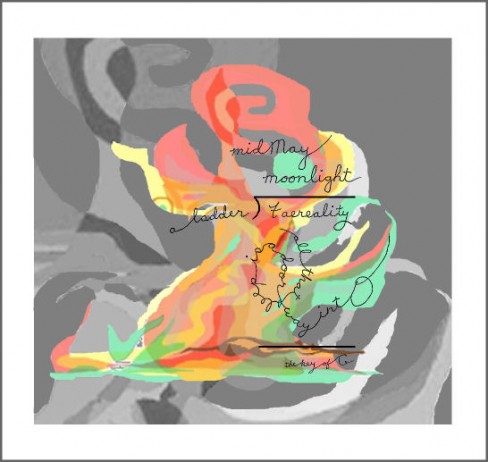
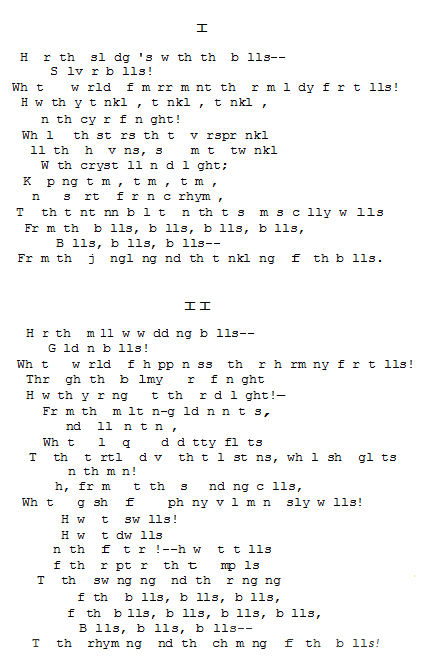
I suddenly realized yesterday that I had my secret messages reversed: the one I thought should be the lower was above the other (as I visualize the piece).  So I redid the poem.  I dropped “and,” while I did so to suggest that what followed might be thought of as the pond, or an illustration of it–as it is intended to be a metaphor for it.

.

Entry 1011 — Back to My Cryptographiku

Monday, February 11th, 2013

I reduced the size of the message in code.  Very Minor, it would seem, but I think it improves the thing significantly!  It looks better to me, but the main thing is that it suggests through its reduced size, the secret nature of the message.  Historical note: when I first made a cryptographiku ten or more years ago, I thought I was really on to something.  Within a year or two, I already felt I’d exhausted the form.  I’d made six or seven cryptographic poems, and used coded material in a few other poems.  I did think the cryptophor (coding employed metaphorically) was an effective device that might remain in the poetry tool kit, but that a poem whose central aesthetic effect depended on one had little future.  I still think it may not, but my Basho poem is a new use of the form so gives me hope others will be able to find other new ways of using it.

Psychologically, I find it interesting that I suddenly, pretty much out of nowhere, had the idea for this new kind of cryptophor of mine (which, I will now reveal, involves a method of coding two messages at once–to suggest layers of hidden meanings rather than just a single under-meaning) after giving up on the device.   My experience suggests how long it can take the subconscious to take an invention, my cryptophor, one step further.  At least five years.

In this poem, to continue, the cryptophor suggests the entrance into another world that Basho’s frog’s dive is, and without anyone’s plunge into real, or equivalents of, ponds . . .   I think its meaningfulness makes my poem at least a good one, and its metaphoric use of “doubling coding” makes it important enough to be considered major.  If I’m wrong, all my poetry has been a waste of time.  Oh, except for the pleasure of creativity I’ve derived from it.  But I have a need to make a significant contribution to the culture of my time, not just do things I enjoy, although I’d see no point in making significant contributions to the culture of my time if I didn’t get creative pleasure from the process.  If that were possible: I don’t think anyone can do anything of cultural value doing something he doesn’t enjoy.  (Something verosophical or artistic.)

.

Entry 1010 — Major or Worthless?

Sunday, February 10th, 2013

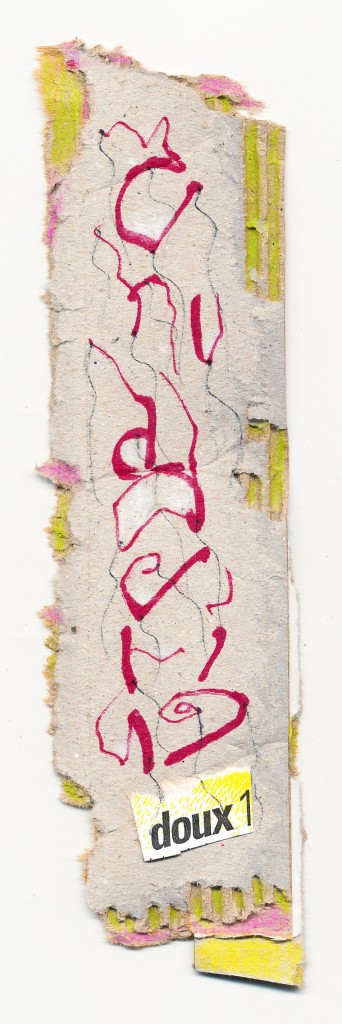
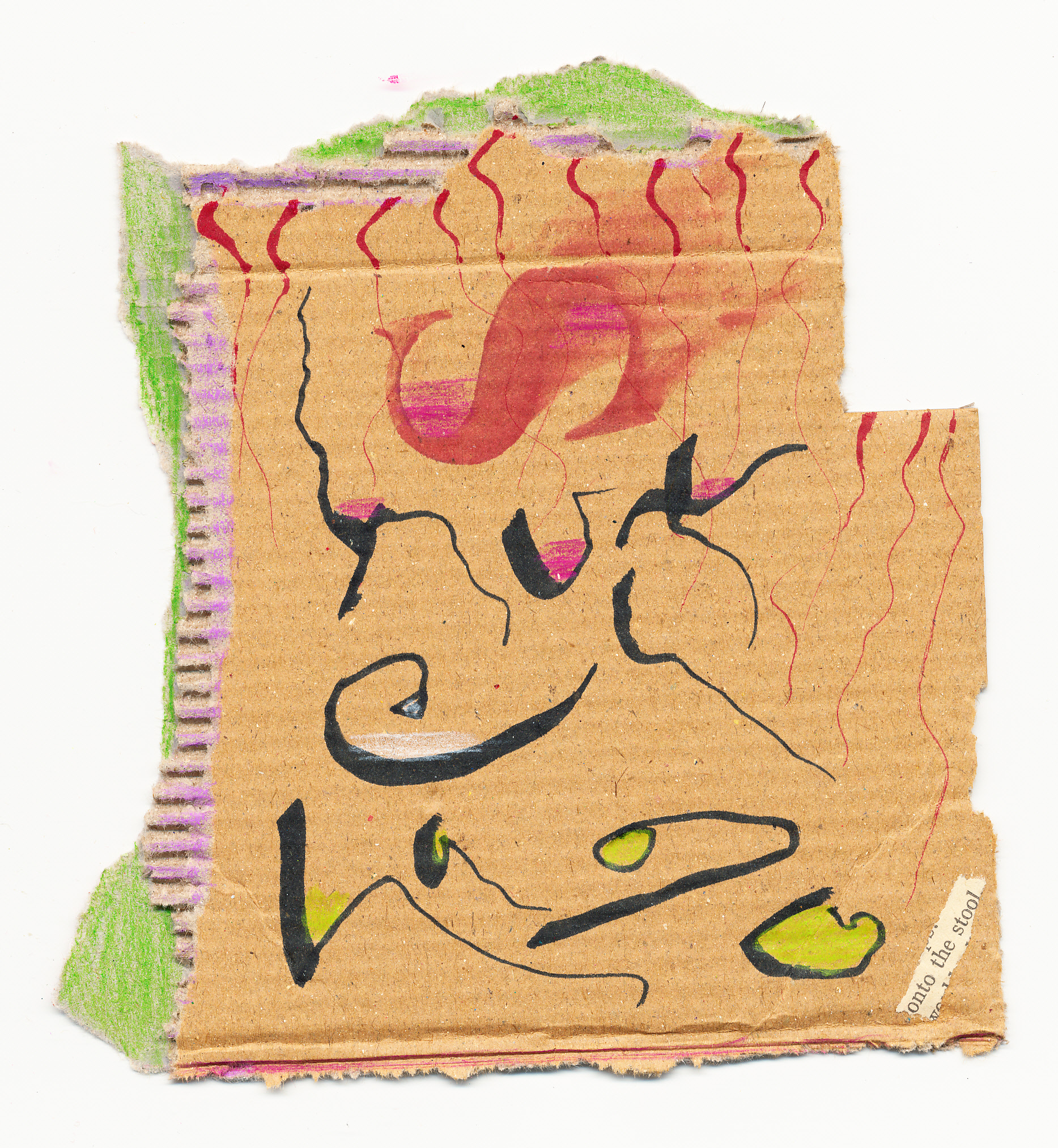
Okay, everybody, I claim that this poem, “Cryptographiku for Basho,” which I finished this morning after having the preliminary idea for it several days ago,  is either a Major Poem or worthless:

For obvious reasons, I tend to go for the former (and I’m not on any pills at the moment).  Discussion on this should follow tomorrow.

(Note: I now have a category you can click to below that has a clue in it for solving this poem–but it will appear under this entry, too.)

.

Clue for “Cryptographiku for Basho”

Sunday, February 10th, 2013

.

Clues « POETICKS

Archive for the ‘Clues’ Category

Entry 1012 — Basho Poem, Last Visit

Tuesday, February 12th, 2013

I suddenly realized yesterday that I had my secret messages reversed: the one I thought should be the lower was above the other (as I visualize the piece).  So I redid the poem.  I dropped “and,” while I did so to suggest that what followed might be thought of as the pond, or an illustration of it–as it is intended to be a metaphor for it.

.

Entry 1011 — Back to My Cryptographiku

Monday, February 11th, 2013

I reduced the size of the message in code.  Very Minor, it would seem, but I think it improves the thing significantly!  It looks better to me, but the main thing is that it suggests through its reduced size, the secret nature of the message.  Historical note: when I first made a cryptographiku ten or more years ago, I thought I was really on to something.  Within a year or two, I already felt I’d exhausted the form.  I’d made six or seven cryptographic poems, and used coded material in a few other poems.  I did think the cryptophor (coding employed metaphorically) was an effective device that might remain in the poetry tool kit, but that a poem whose central aesthetic effect depended on one had little future.  I still think it may not, but my Basho poem is a new use of the form so gives me hope others will be able to find other new ways of using it.

Psychologically, I find it interesting that I suddenly, pretty much out of nowhere, had the idea for this new kind of cryptophor of mine (which, I will now reveal, involves a method of coding two messages at once–to suggest layers of hidden meanings rather than just a single under-meaning) after giving up on the device.   My experience suggests how long it can take the subconscious to take an invention, my cryptophor, one step further.  At least five years.

In this poem, to continue, the cryptophor suggests the entrance into another world that Basho’s frog’s dive is, and without anyone’s plunge into real, or equivalents of, ponds . . .   I think its meaningfulness makes my poem at least a good one, and its metaphoric use of “doubling coding” makes it important enough to be considered major.  If I’m wrong, all my poetry has been a waste of time.  Oh, except for the pleasure of creativity I’ve derived from it.  But I have a need to make a significant contribution to the culture of my time, not just do things I enjoy, although I’d see no point in making significant contributions to the culture of my time if I didn’t get creative pleasure from the process.  If that were possible: I don’t think anyone can do anything of cultural value doing something he doesn’t enjoy.  (Something verosophical or artistic.)

.

Entry 1010 — Major or Worthless?

Sunday, February 10th, 2013

Okay, everybody, I claim that this poem, “Cryptographiku for Basho,” which I finished this morning after having the preliminary idea for it several days ago,  is either a Major Poem or worthless:

For obvious reasons, I tend to go for the former (and I’m not on any pills at the moment).  Discussion on this should follow tomorrow.

(Note: I now have a category you can click to below that has a clue in it for solving this poem–but it will appear under this entry, too.)

.

Clue for “Cryptographiku for Basho”

Sunday, February 10th, 2013

.

Entry 441 — Vocational Resume « POETICKS

Entry 441 — Vocational Resume

I missed some entries again but had a fair excuse for a change: I was working on some reviews for Small Press Review that I actually finished.  What’s below is the entry on me at some internet Writers’ Directory.  I just updated it.
.
Personal Information
First Name: Bob
Last Name: Grumman
Suffix:
Nationality: American
Full Birth Date (MMDDYYYY) or Year Only: 02021941
City of Birth: Norwalk
State of Birth: [USA] Connecticut
Country of Birth: United States
Sex: M
Email: [email protected]
Career
Career: Datagraphic Computer Services, computer operator, 1971-76; Charlotte County School Board, substitute teacher, 1994-2009. Writer.
Publications
Publications: Poems (visual haiku), 1966; Preliminary Rough Draft of a Total Psychology (theoretical psychology), 1967; A Straynge Book (children’s book), 1987; An April Poem (visual poetry), 1989; Spring Poem No. 3,719,242 (visual poetry), 1990; Of Manywhere-at-Once, vol. I (memoir/criticism), 1990; Mathemaku 1-5 (mathematical poetry), 1992; Mathemaku 6-12 (mathematical poetry), 1994; Of Poem (solitextual poetry), 1994; Mathemaku 13-19 (mathematical poetry), 1996; A Selection of Visual Poems (visual poetry), 1998; min. kolt., matemakuk, 2000; Cryptographiku 1-5 (cryptographic poetry), 2003; Excerpts from Poem’s Search for Meaning (solitextual poetry), 2004; Greatest Hits of Bob Grumman (mixture of poetries), 2006; Shakespeare and the Rigidniks (theoretical psychology), 2006; From Haiku To Lyriku, 2007; April to the Power of the Quantity Pythagoras Times Now (collection of mathemaku), 2007: This Is Visual Poetry (visual Poetry), 2010; Poem Demerging (solitextual poetry), 2010. A Preliminary Taxonomy of Poetry, 2011. EDITOR: (with C. Hill) Vispo auf Deutsch, 1995; Writing to Be Seen, vol. I, 2001.
Home Address
Home Address 1708 Hayworth Rd.
City Home: Port Charlotte
State Home: [USA] Florida
Country Home: United States
Zip Code Home: 33952
Phone Home: (941) 629-8045
Business Address
Business Address PO Box 495597
City Business: Port Charlotte
State Business: [USA] Florida
Country Business: United States
Zip Code Business: 33949
Phone Business: (941) 629-8045
Subject Codes
Subject Code1: PLAYS/S C R E E N PLAYS
Subject Code2: POETRY
Subject Code3: PSYCHOLOGY
Subject Code4: LITERARY CRITICISM AND HISTORY
Subject Code5: SCIENCE FICTION/FANTASY
Subject Code6: NOVELS

Leave a Reply

Entry 56 — New Typographical Symbols « POETICKS

Entry 56 — New Typographical Symbols

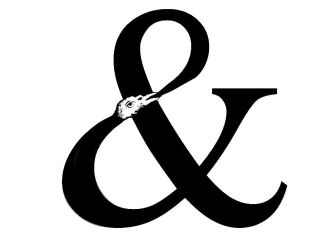
Below, from #698, a combination of an exclamation mark and a question mark invented in 1962 by Martin K. Speckter, an advertising executive, that’s called an “interrobang.”

Naturally, I had to try my hand at inventing typographical symbols.  The results, the first representing (!), the second (?):

Leave a Reply

Entry 46 — Clues « POETICKS

Entry 46 — Clues

The Four Seasons

.

3 31 43 73 5 67    3 61 43 67 67 19 41 13    1    11 19 7 31 5  3 12 15 21 4 19    3 18 15 19 19 9 14 7    1    6 9 5 12 4  8 21 25 33 9 30    8 28 25 30 30 16 24 14    4    12 16 10 21 9  64 441 625 1089 81 900    64 784 625 900 900 256 576 196    16    144 256 100 441 81

.

Today, just some helpful clues toward the solution of the cyrptographiku above:

1. A cryptographiku is a poem in a code.  The code chosen and the way it works has metaphorical significance.  The text encoded is generally straight-forward.

2. There are three codes used here, one of them very simple, the other two simple if you are mathematical.

3. The codes were chosen to illustrate a theme of Wallace Stevens’s, to wit: winter is reality at its most fundamental, summer is winter transformed by metaphorical layering.

4. Note that each of thr three lines is the same length, and divided into three “words,” each the same length of the homologous “word” in the other two lines.

5. The decoded text uses a technique Robert Lax pioneered in to convey a meaning I consider archetypally deep, like the meanings Lax’s similar poems have for me.

6. The final meaning of the poem is (a) Nature is eternally changing; and (b) Nature is eternally unchanging.  When I saw I could make ti say that, I got a thrill!  I consider this poem one of my best inventions–even though I’m not sure it works as a poem.

Have fun, kids!

Leave a Reply