Entry 386 — 4 Mathemaku from c. 2005 « POETICKS

Entry 386 — 4 Mathemaku from c. 2005

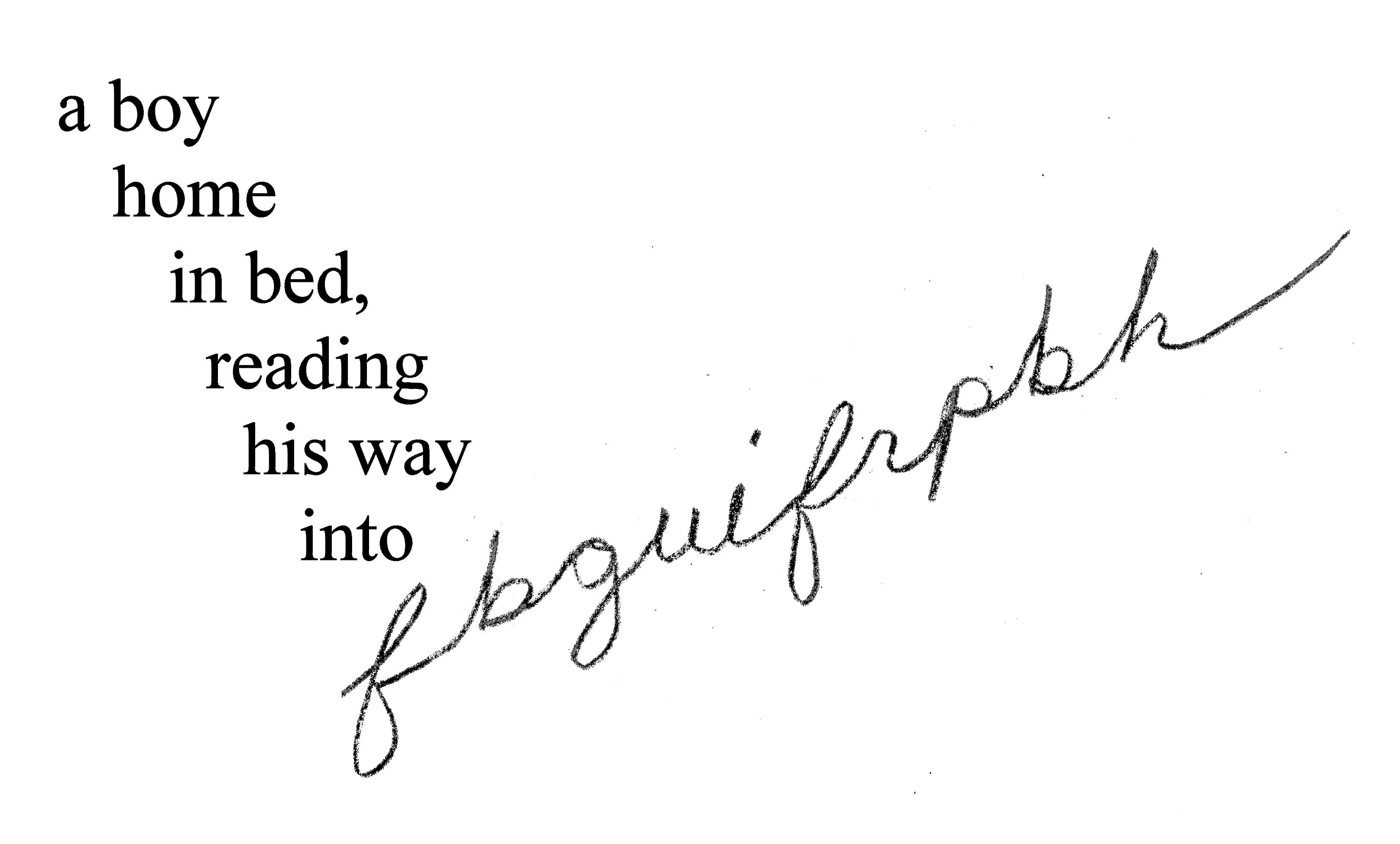
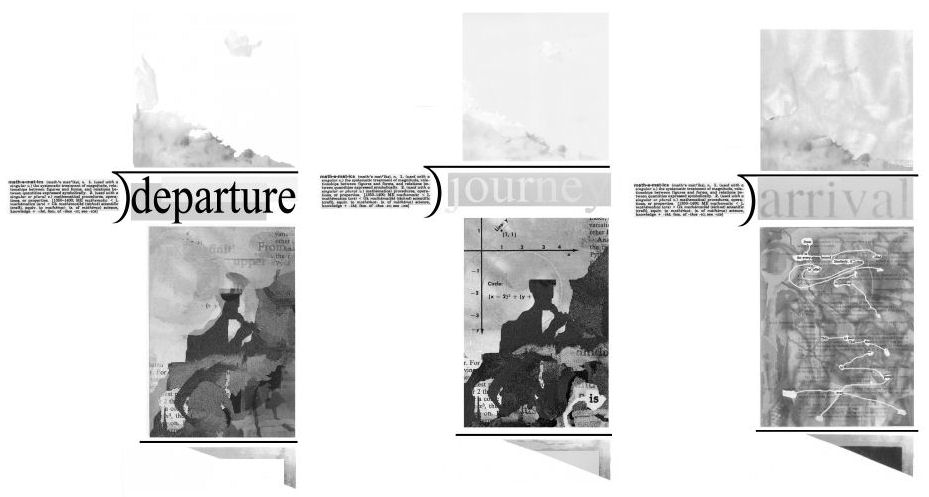
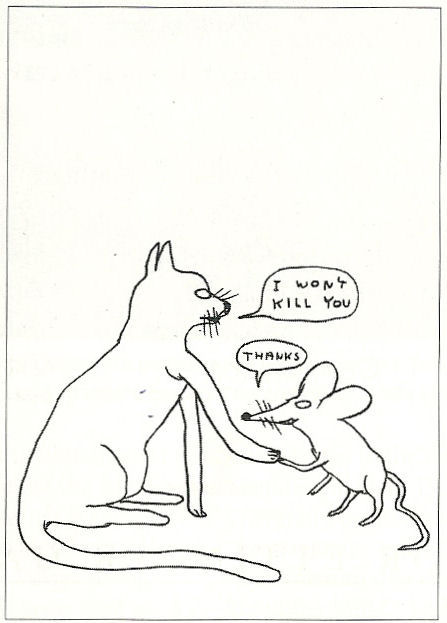
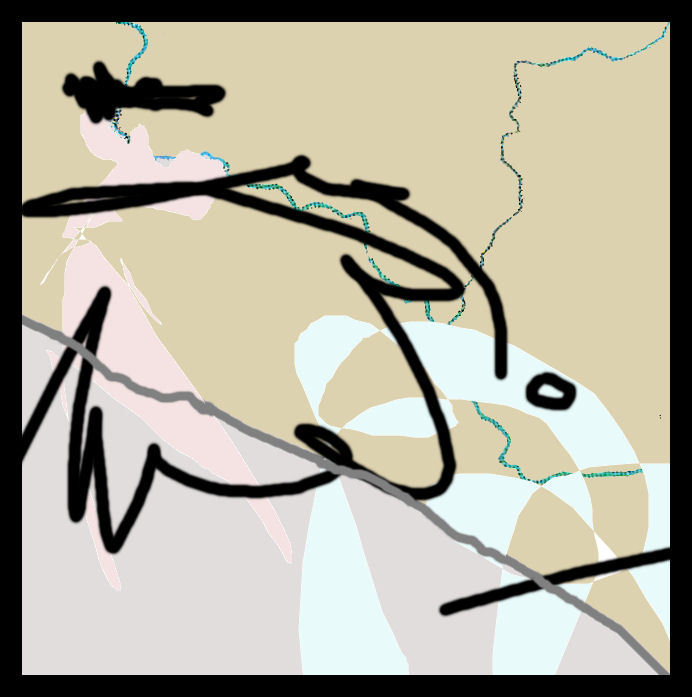
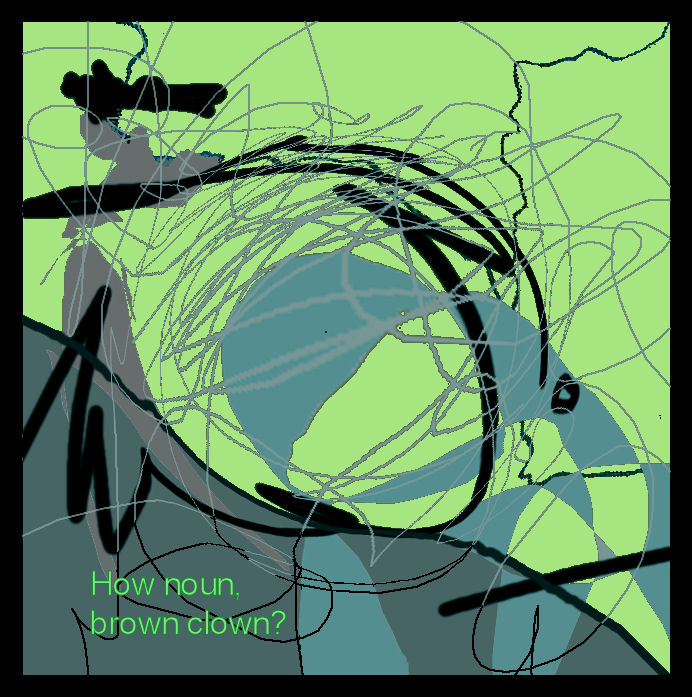
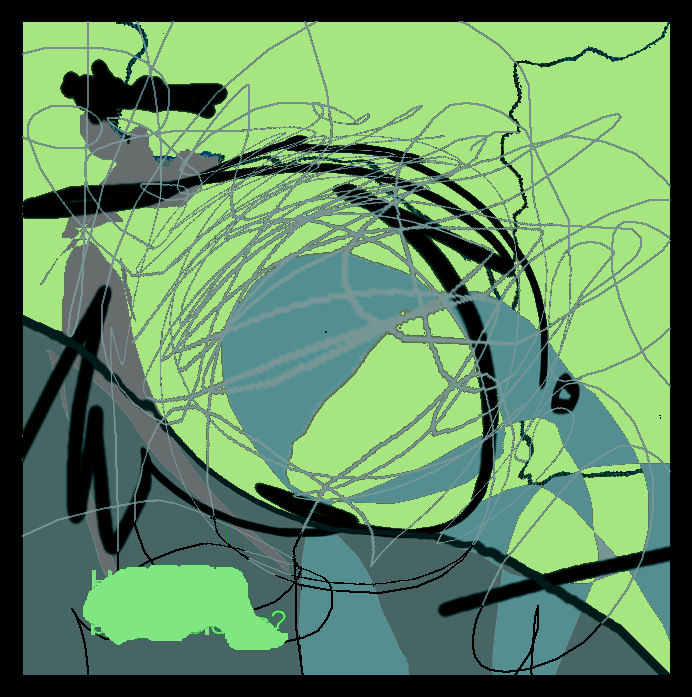
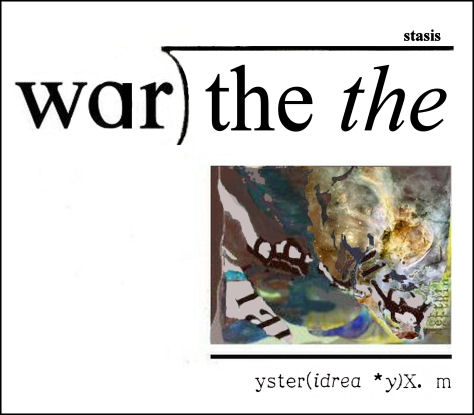
As of part of my continuing neurotic habit of adding small projects to my over-extendedness, I began going through my old blog entries to find out when I made various mathemaku of mine, for I posted all of them at my blog, I think, as I finished them (and even when sketching some of them, as well as when revising them).  I’m now up to my 600th entry.   I was happily reminded of the many frames I’ve done for my Long Division of Poetry sequence: around thirty, I’m pretty sure.  I found one sub-sequence that I quite like and don’t think I’ve ever posted as a sequence:

.

.

.

I’m not sure whether or not the following frame should be considered at extension of this little sequence.  Originally, I added it simply because I thought it nice, but not worth an entry to itself.  Now I begin to see how it may connect to the other two. . . .

.

Not that any woman ever drove me to drink.  Wait, women were the reason I drank: I only went to bars for the strippers, except the few times I wanted to watch Lakers’ games before I had a television.  I drank more beers (always beers though I never liked the taste of beer) than needed to cover the cost of being there mainly to make the strippers look good.

3 Responses to “Entry 386 — 4 Mathemaku from c. 2005”

  1. Kevin Kelly says:

    You’re going to upset the feminists with that last comment, mister. By the way, the copy editor in me tells me there is some grammatical hell going on in your opening graph for this entry — i.e. “now” disguised as “not,” and read the first sentence out loud to yourself. Regarding the mathemaku, I think the first one is perfect already, and the others are unnecessary.

  2. Bob Grumman says:

    Well, thanks for the copy editing, Kevin. As for your literary criticism, I’m afraid I have over 30 other divisions of “poetry” logic would require you to say were unnecessary. But no problem: now that you’re a Californian, your literary opinions don’t count no more.

    Note, despite your comment, I have approved you as a commenter here. Just shows what kind of person I am, right?

    –Robbit

  3. Kevin Kelly says:

    You seem to be implying that you can outperfect perfection. That’s so Grummanly of you.

Leave a Reply

Entry 454 — Mathemaku-in-Progress « POETICKS

Entry 454 — Mathemaku-in-Progress

I continue to believe someday people will be interested in how various poems of mine came about.  Hence, the following three stages of my unfinished “Cursive Mathemaku, No. 2″:

.

.

.

.

I scribbled notes for version one, then took weeks to draw my ideas at Paint Shop, and more weeks to put them together in a work something like version one, which is probably the third version of the finished base of the poem.  Almost two months went by before I dared add the final cursive lines I always meant the work to have to make version two.  Over a week went by before I made (today) the more well-thought-out third version.  I’m pretty sure both that the third version (already revised two or three times–modestly) is the one I’ll go with.  I’m looking forward to adding colors, with a good idea of what they’ll be, although I never go with all or even most of the colors I use in a work.

2 Responses to “Entry 454 — Mathemaku-in-Progress”

  1. hyperpoesia says:

    i love these, bob!

  2. Bob Grumman says:

    Hey, thanks for the good words, Maria. As soon as I saw them, I thought of your embroidered poems and how similar my scribbled poems have in common with them–a kind of looseness, different-colored threads, domesticity (?), sensitivity (I hope!). Main thing is how much fun they are!

    –Bob

Leave a Reply

Entry 589 — A Spin-Off « POETICKS

Entry 589 — A Spin-Off

The poem below is something I spun off the mathemaku I posted yesterday.  I made it mainly because I wanted to use a complete long divion poem as a term in a larger long division–something I’ve done once before but have never been satisfied with. 


* * *

Friday, 9 December 2011, 8 A.M.   Now that I’m starting to get things done, my luck has soured.   A while ago I was getting ready to take the three framed works I now have for counter-display to the Arts&Humanities Council office.  I could only find two.  I was carrying the missing one around in my bicycle basket a few days ago.  Looks like someone grabbed it.  Unless I found a some incredibly stupid place to hide it from myself here.   Luckily the frame was a cheap one, and the poem, which I’m sure the ones who stole it had not interest in (if they stole it for the poem, I’d be very pleased) is about the easiest of the ones I have to zap out another copy of.  It’s the “Hi” one.  But I’m out ten dollars or so, and have to ride out to get another frame, a wearying chore that upsets my plans for the day.

It is now a little after nine.  Just as I was about to leave to get a new frame and take care of a few other errands, I found the “stolen” work.  It was in a packing envelope (as I remembered it had been) and right in the chair I would naturally have put it in after getting back from the bike ride I’d had it with me on.  My jacket was draped over it, but not entirely over it.  I should have looked where it was as soon as I thought it lost.  I’m not going senile–I’ve been doing things like that all my life.  I must say, I feel a lot better.  And something good came from it: needing another copy of the poem, I fooled around with it at Paint Shop and improved it.  (Hey, that counts as my work for day on exhibition-related matters!)

It’s now eleven.  I did some more work concerned with the exhibition: I went to the A&H office and talked to Judy, the lady in charge.  I got a better idea of things from her–such as the date of the opening (3 January 2012).

5 P.M. and I’ve corrected my “A Christmas Mathemaku,” which I’ve always considered a potential crowd pleaser, and done a write-up on it.  I plan to leave a framed copy of it at the Grumman Exhibition Center on Monday.

 . 

easy tracking
Order Flower Bouquet

Leave a Reply

Entry 133 — Somewhat Awake Again, I Think « POETICKS

Entry 133 — Somewhat Awake Again, I Think

I simply disconnected from my blog–just didn’t think of it for about a week until a day or two ago.  Then last night for some reason I started thinking about haiku and came up with the following poems that I thought worth making this entry for:

.

.                            early April night:
.                            barely a single haiku
.                            of moonlight in it

.

.                            the street’s cherry blooms,
.                            dazzling, yet almost grey
.                            besides the haiku’s

.

.

.

.

.

.

Tags:

Leave a Reply

Claude Monet « POETICKS

Archive for the ‘Claude Monet’ Category

Entry 1078 — An Analysis of a Mathexpressive Poem

Friday, April 19th, 2013

A few people have told me (I don’t know how seriously) that they have not been able to figure out all the pieces I have in my latest entry in my Scientific American blog, and a few of mine colleagues even claim I can’t multiply.  Ergo, I have an excuse to blither about one of my poems.  I’ve chosen one I think the easiest to defend.  First, though, here’s Monet’s The Regatta at Argenteuil.  It’s important for one trying to understand my poem to know of it because it is central to the poem (as the third poem in my triptych makes clear with a full reproduction of it).

TheRegattaAtArgenteuil

Okay, to begin with the simplicities of the poem below, a person encountering it must be aware that it is a long division example.  That is indicated by two symbols: the one with the word, “poem,” inside it, and the line   under the sailboat.  The first, so far as I’m aware, has no formal name, so I call it a dividend shed.  The line is a remainder line.  The two together, along with the placement of the other elements of the poem, one where a long division’s quotient would be, one where its divisor would be, one where the product of the two would be, and one under the remainder line where a remainder would be, clinch the poem’s definition as long division.

MonetBoats1-FinalCopy
Now, then, anyone remembering his long division from grade school, should understand that the poem is claiming five things:

(1) that the text the painter who is unsleeping a day long ago multiplied times the scribbled sketch, or whatever it is to the left of the dividend shed equals the sailboat shown;

(2) that the sailboat is larger in value that either the painter or the sketch;

(3) that the addition of the letter fragments under the remainder line to the sailboat image makes the sailboat equal the poem referred to above it;

(4) that the the sailboat should be considered almost equal to the poem;

(5) that the letter fragments, or whatever it is that they represent must be less in value than any of the other elements of the poem with the possible exception of the quotient.

(2) and (5) are decidedly less important than the other three, but can still be important.

I could easily claim that the poem is wholly accurate mathematically by giving the painter a value of 2, the sketch a value of 7, the sailboat a value of 14, the fragmented letters a value of 3 and the poem a value of 17.  Arbitrary?  Sure–but by definition as Grummanomical values of the elements mathematically correct however silly.  (And I would contend that if I had time, I could given them Grummanomical poetic values most people would find acceptable, and–in fact–I believe one of the virtues of such a poem is that it will compel some to consider such things–at least to the extent of wondering how much value to give a painter’s activity, how much to a sketch, and whether a poem is genuinely better than either, or the like.)

7into17

I am including the above in my entry to help those a little fuzzy about long division (and I was definitely not unfuzzy about it when I began making long division poems, and still sometimes have to stop and think for more than a few minutes at times to figure out just what one of my creations is doing).   My poem imitates it in every respect except that it does what it does with non-numerical terms rather than with numbers.  I hope, however, that someone encountering it without knowing much or anything about such poems will at least find things to like in it such as the little poem about the painter, or the idea of the childish sketch as perhaps the basis of what would become a Grand Painting.  Some, I believe, would enjoy recognizing the sailboat as the one in Monet’s masterpiece, too.  But what is most important aesthetically about the work is what it does as a mathematical operation.  That operation must make poetic sense if the work is to be effective.  Needles to say, I claim it does.

To consider the question, we must break down the long division operation the poem depicts into its components.  First of all, there is the multiplication of the sketch by what the painter is doing to get the sailboat–the painting of the sailboat, that is, sketch times something done by a painter almost having to yield a picture of some sort.  Does this make sense?  Clearly, a painter must carry out an operation on some initial sketch or idea or equivalent thereof to get into a painting, so I don’t see how one can wholly reject painter operating on sketch yields portion of painting as analogous to . . . 2 operating on 7 to yield 14.  But there is more to it than that, if only to those of us who think of multiplication as magic, and are still in touch with the way we felt when the idea that 2 times 7 could make 14 was new to us.  That is, just after we had internalized the remarkable mechanism for carrying out multiplication.  For us, the poem’s painter is using his painting mechanism to hugely enlarge a sketch the way the operation of multiplication (usually) hugely enlarges a number.  Doing so in a kind of concealed magical way unlike mere addition does.  A three-dimensional way.

At this point, the question arises as to whether the sailboat nearly equal to a poem.  That’s obviously a subjective matter.  Those who like sailboats (and poems) will tend to say yes.  Note, by the way, that “poem” here does not mean what I say it mean verosophically, but as what one of my dictionaries has it: “something suggesting a poem.”  Here the context–a work of art–makes it impossible to take the word literally,–and moreover, of taking it to mean not just something suggesting a poem, but something suggestion a master-poem.

Well, not quite here: the penciled informality of the word, “poem,” counters the idea that a super-poem is being referred to, and the sailboat is only a black and white portion of a great painting, not a great painting by itself.  We know it’s on its way to being that, but the multiplication is only telling us of it as a pleasant step, not anywhere close to being a realized goal.

The remainder, fragmented words, add very little to it, but we will later see that they are fragments of the phrase, “the faint sound of the unarrestable steps of Time.”  Again, it’s a subjective matter as to whether these words could deepen anything sufficiently to enable it to suggest a poem.  I say it does.  But even if not, I think it would be hard to claim that the addition of such words to a visual image could not be called a plausible attempt to mathematically increase the image’s value.

In conclusion, I claim that the poem carries out the operation of long division in two steps, one multiplicative, the other additive, to valuable aesthetic effect.  Elsewhere I have shown how, according to my thinking, it will put someone one appreciative of it into a Manywhere-at-Once partly in the verbal section of his brain and partly in the mathematical section of it.  The next poem in the triptych goes somewhat further; the sequence’s final poem brings everything to a climax–I hope.

.

Entry 931 — Continuing the Monet Sequence

Friday, November 23rd, 2012

Finally into my creative-flow zone this morning after thinking I never again would be, I produced the following, which is the fourth frame in a sequence devoted to Monet I hope to continue:

Here’s the frame just before the above one, to provide context:

I’ve had it here before, I’m pretty sure, but if you look carefully, you’ll see a few small changes I’ve made to it since then.  I still think it’s stupendously fine.  Urp.

.

John Bloomberg-Rissman « POETICKS

Archive for the ‘John Bloomberg-Rissman’ Category

Entry 862 — What’s A Literary Critic?

Saturday, September 15th, 2012

There’s a discussion at leafepress.com the title of which is, “What is Literary Criticism? What is a Literary Critic?” It’s mainly between Conrad DiDiodato and John Bloomberg-Rissman, but Ed Baker takes a few potshots at the others, basically reiterating the standard belief of the romantic poet that criticism is irrelevant to poets.

The discussion annoyed me because it made no references to my criticism. Of course, I didn’t really expect it to, although Conrad knows a little of my work, but I have trouble listening to people taking tenth-rate critics seriously when my work is available. Yes, I am that arrogantly convinced of the value of my criticism. Not that I’m all that sure it’s any good, but that I am positive that it’s many orders of magnitude better than Derrida’s, say, or DeMan’s, or that moron Foucault, which these guys seem to admire (although they do seem to be familiar with a wide range of critics, some of whom I don’t take as tenth-rate, like Cleanth Brooks.

The discussion annoyed me more because, like so many such discussions, it starts nowhere, really, and splathers inconclusively severalwhere. Its central defect is absence of defined axiom-setting terms—due to the standard belief of its participants that “artworks . . . can NEVER be fully unpacked.” The truth is that any artwork can be unpacked sufficiently to satisfy any sane person. Just as the distance from my house to yours can be measured sufficiently to satisfy any sane person although it can never be measure perfectly.

This absence of defined terms allows them to say sometimes interesting things, and not worry about contradiction. And it satisfies the political need of the naïve to feel certain all beliefs are equally true/false, just as all persons are equally good/bad. The only problem with it is that it’s nonsense. This is a problem, because false beliefs are much more likely to lead to grief than true beliefs—as every knows intuitively but intellectuals keep out of their verbal awarenesses. For example, an intellectual won’t make a fifty-foot swan dive into a pool whose water he knows is frozen because his reptile brain will give him nausea at the thought of doing so. But the nausea will never work its way up into his verbal awareness and bother him with the possibility that a belief that a fifty-foot dive into a pool of solid ice is harmful is true whereas a belief that it is not harmful is false.

I know. Simplistic. But in the final analysis, true.

I began this expecting simply to answer the questions in the title of the leafepress.com discussion. No, not answer them, just scatter a few thoughts concerning them. I’ve elsewhere answered the questions pretty well, I believe, although I’m not sure when or where. Right now, however, I have one new thought (for me) about the subject: that there is an important difference between a literary critic and a literary appreciator. A literary critic tells you—make that, “tries to tell you”—everything important to know about a particular literary work based on its expressive elements alone. Which will include what is denoted, what connoted and what is explicitly alluded to. It will, I believe, also include what is implicitly alluded strongly enough for most knowledgeable engagents of the work under analysis to connect to. “Fourscore and ten years ago,” for instance, with “Lincoln’s “fourscore and ten years ago” being an explicit reference.

Hmm, I see that I’ve defined a literary critic, except that I left “literary work” undefined. So be it, for now, although it’s easy to define; it’d take too many words for me to bother doing that here (and I’ve done it elsewhere). Oh, one other minor omission: I didn’t say what it is important to know about a literary work. I’ve defined that, too. It wouldn’t take all that many words, but too many for me to bother with here.

Let me turn to what a literary appreciator is. I decided I needed the term because it seems to me my definition of the literary critic is almost identical to any new critic’s. But new critics opposed going beyond the artifact on the page or pages in analyzing it. I believe them correct to dos, but only strictly speaking. I want someone telling me about a poem, say, to tell me things about its maker, including things having little or nothing to do with the poem. Like, Wow, a guy like Ezra Pound could believe in a totally loony economics theory yet write “In a Station of the Metro!” A literary appreciator is a literary critic who also is willing to discuss all kinds of things about a poem beyond what it is as literature. He is not someone who slights literary analysis to do this. He must also avoid finding implicit allusions that aren’t there for any normal person and building wacky psychiatric interpretations out of them the way Freud did and has followers have. As basically all the French critics and their allies have in diverse ways.

Not that there isn’t a place for, say, someone who focuses on what forces in society may have influenced the final form of a poem. Such a person is neither a literary critic nor a literary appreciator; he is a sociological critic of literature.

Before I end I want to mention that I would divide literary critics into two kinds: the practical literary critic and the theoretical literary critic (unless I think of a better name). The first deals with works of literature, each mostly by itself, although he may (and usually should) connect a work to other works of its author, and to like works by others; the second does this also, but presents some kind of theory for the nature and value of a literary work—not just that rhyme is pleasurable, for instance, but why it is. Along the way he will provide a taxonomy of the kinds of literary works he deals with, and a continuing list of the techniques used in them with detailed descriptions of them, and why they are effective.

Above the two kinds of literary critics is the literary philosopher. Such a person is a serious seeker of significant final truths about literature. He will probably also be a philosopher of aesthetics, one seriously seeking significant final truths about all the arts, not just literature. My taxonomy continues upward, finally arriving at the neurophysiological theorist—who is one step below the Total Verospher, who seriously seeks significant final truths about everything!

Urp.

.

Entry 390 — Two Poems from three Years Ago « POETICKS

Entry 390 — Two Poems from three Years Ago

.

Just about three years ago I wrote a version of the following poem:

.             Poem has a question

.             Whose sleep is the sky?
.             For hours and
.             hours Poem
.             wondered.

I improved it just now by deleting its previous two last words, “about that.”

Note: I find that the day after I wrote the above, I “improved” it by adding ten or twelve lines to it.  I hereby disown that version.

The following is a re-done poem I sent a year or more earlier to something going on in Mexico.  I was trying to do something with the show’s theme of International friendship, or something.  Barely worth keeping, I’d say but may some will enjoy it.

Note: as should be obvious from the way I strained tofind things for this entry, I’m still blah.

5 Responses to “Entry 390 — Two Poems from three Years Ago”

  1. marton koppany says:

    Whose sleep is the sky.

  2. Bob Grumman says:

    Aah, you minimalists!

    But possibly yours is an equal but different version of the poem; I like Poem physically in his poems, though, and the emphasis on the time the question intrigues him. There’s even a juxtaphor (implicit metaphor) between the motion of the sky and the motion of Poem’s wonder–for me, at any rate.

  3. marton koppany says:

    It just came to my mind as a possible “answer” to Poem’s “question”. Perhaps, yes, because he was physically there. :-)

  4. Kevin Kelly says:

    I’m still working my way in reverse (top to bottom) on your blog, Bobby, so I may find more like these, but I think there’s something really interesting going on in “Mathemaku No. 21,” specifically in the figure after the minus sign. I like the possibilities with the reverse type creating new shapes inside those already created in the mashing up of letters.

  5. Bob Grumman says:

    Thanks for the look, Kevin.

Leave a Reply

Enter 389 — “Mathemaku for Paul Giovanopoulos” « POETICKS

Enter 389 — “Mathemaku for Paul Giovanopoulos”

Another from my previous blog–because it seems interesting to me, but mainly because I’m again too out of it to work up a decent fresh entry:

.

The Japanese is from a haiku by Basho.  English translation: “autumn nightfall.”  The quotient is a collage of three appropriations, one of them having to do with Dr. Who.   I’m a bit bothered that the appropriated image of the Giovanopoulos painting is so important a part of the poem, that it makes the poem possibly much more his work than mine.  I hope that the reductaesthetic (or conceptual/aesthetic) use I make of it outweighs that, though.  I am not bothered about stealing the image, for I believe all texts, songs and images should belong to everyone once released to the public–except when someone gains money and/or prestige from the use of another’s work that the work’s creator could have made.  For instance, if I made copies of the Giovanopoulos work and sold them.  If I can sell copies of my poem using his work, though, it is too unlikely that anyone would buy it who would, if not for my work, have bought a copy of it that Giovanopoulos is getting royalties from.  In other words, my use of the image should not reduce its economic value to him.  It could even be considered an advertisement that would increase the value of that work or of the artist’s work in general.

I c0nsider myself morally bound to give Giovanopoulos credit, as I have, in my title.

I might add that I wouldlove it if anyone were to appropriate anything of mine the way I appropriate a good many works of others.

Leave a Reply

Entry 586 — “Sonnet from My Forties” « POETICKS

Entry 586 — “Sonnet from My Forties”

While hunting this morning for an essay of mine that had something in it I wanted to tell Richard Kostelanetz about, I came across a copy of Jake Berry’s zine, The Experioddicist, and found a version of the sonnet of mine I wrote about in my Of Manywhere-at-Once.  I spent months on it, never getting it right, then continued working on it on and off–until now, never getting it right.  I often thought for a while I had.  That’s the case now.  The version in The Experioddicist isn’t quite right, but I immediately saw how I thought I could change it so it was: here’s the once again final version:

     Sonnet from My Forties

     Much have I ranged the broad-skied latitudes
     That Stevens festivalled his inquiries
     On truth and the imagination to,
     And reams used up in vain attempts to reach

     The heights that he did. Often, too, I’ve been
     To where the small dirt’s awkward first grey steps
     Toward high-hued sensibility begin
     In Roethke’s verse, or measured the extent

     Of wing-swirled, myth-electric, royal light
     That Yeats achieved, or marveled down the worlds
     That Pound re-morninged windily to life,
     but failed as dismally to match their works.

     Yet still, nine-tenth insane though it now seems,
     I seek those ends; I hold to my huge dreams.

Okay, now that I’ve typed it out, I’m not so enthusiastic about it.  I changed line 3 from “On truth and metaphor in due course to” to “On truth and the imagination to,” a definite improvement.  The first stanza still doesn’t quite do it for me, but the rest of the poem seems fine–or would, I’m sure, if I hadn’t read and reread it some many hundreds of times.  Needless to say, it’s in the old-fashioned mode of Hopkins/Yeats/Thomas and probably over-rich–certainly to today’s taste.  It’s somewhat redeemed by its use of reversed rhymes (which are full rhymes, not alliterations).  It still sums up my life in poetry, though–alas.

* * *

Tuesday, 6 December 2011, 5 P.M.  A non-productive day, although I did try to get a few things done.  Mainly, I spent a couple of hours getting a copy of terms that are for use in my “Mathemaku for Scott Helmes”–twice, the second time because I needed them a different size.  (Actually, I plan to have a full-size version of the work, and a smaller one, so I can use both sets of terms.)  Earlier, another round of tennis, which went fairly well for me, for a change.  A second breakfast with teammates at the nearby McDonald’s followed.  Later I had a doctor’s appointment to get through and some grocery shopping to do.  I got some new medicine for my continuing urinary problems.  Right now I’m weary, as usual.  I feel, as I often do, that if I could just go to bed and go to sleep for twelve or thirteen hours, I’d be a new man.  But, although I’m more than sleepy enough than I should need to be to go to sleep, the chances are I wouldn’t be able to get to sleep, nor stay asleep for even as much as an hour if I did.

.

Leave a Reply

Artists Mentioned in Entries « POETICKS

Archive for the ‘Artists Mentioned in Entries’ Category

Entry 659 — A Tribute to the Piano

Saturday, February 18th, 2012

I had high hopes for this one, which I composed yesterday.  I even thought I might work a sequence out of it, using the Klee ship “musical theme” as the first step of a visual symphony.  But I wasn’t satisfied with what I did with the ships.  As I worked with them, though, I came up with a lot of minor ideas I liked.  The main one was a suddenly conscious attempt to provide a metaphor for the coming of spring.  But I also liked breaking up what was originally as single framed image, and changing the sizes of each unit.  Grey-scaling the first two tiny ones seemed a nice touch, too.  And the escape of the final ship!  I didn’t like my dividend too well, either–after my initial enthusiasm for it (being a sucker for anything having to do with spring).  For some reason it doesn’t seem quite there, for me.  Maybe I’ll simplify it to, “a brook’s revived consideration of an April countryside.”  Yes, I think I was trying for too much. . . .

.

Entry 657 — My Motto as a Poetry Critic

Thursday, February 16th, 2012

 Thinking about what Tony Robinson had at his blog spurred me to this motto of my own (obnoxious) practice as a poetry critic: Try for maximal understanding of the nature and value of what I’m critiquing, fully committed to the advance of poetry, as I understand it, and expressed with the best balance of clarity and fresh language I can manage.  I originally continued with “–with no significant suppression of emotion, regardless of the tender feelings of the hyper-offendable,” but upon reflection found that nice to say but too secondary for this motto. 

Better: Using the the best balance of clarity and fresh language I can manage, try to express maximal understanding of the nature and value of what I’m critiquing, fully committed to the advance of poetry, as I see it.  Ah, but I now see that “the value of what I’m critiquing” would include what the latter does to advance poetry.  Ergo:  Try, using the the best balance of clarity and fresh language I can manage, to express maximal understanding of the nature and value of what I’m critiquing. 

And here’s a copy (an imperfect one) of my motto as a poet:

.

Entry 656 — A Clone of Shakespeare

Wednesday, February 15th, 2012

To continue my argument that the arts progress just like verosophy does (and take care of this entry with minimal effort), here’s a question: if a clone of Shakespeare had been created in 1980 and he was now a professional actor writing plays for the stage and screen, would they not be better than the ones he wrote four hundred years ago?  Would he not be able to improve on what he composed then?

.

Entry 655 — A Response to a Blog Entry

Tuesday, February 14th, 2012


It’s at Anthony Robinson’s blog here.

Here’s what I said:

“Inaccessible writing” as writing not like I do, yes–and the related “incomprehensible poetry” without a hint that others may find it comprehensible–even the critic himself if he really tried. I try never to label any poem inaccessible although I will confess I can’t figure out a poem when that’s the case.

Good words on the so-called “principal aim”–but I would add that I would like to know why a poetry for the few should be denigrated. Should no one compose operas because, in Crews’s words, “most audiences will have trouble wrestling (them) into meaning?” Or cook really far-out gourmet dishes? Crews should have said he couldn’t say anything intelligent about Miller’s book, and ended his “review.”

Can’t say I think much of Crews’s example of Miller, when he’s good. Wind does have a sound, it seems to me, since–as I understand it–sound is what happens when something causes the air to vibrate which in turn causes mechanisms in the ear to vibrate. The wind, being air, would do this directly. Or, in the poem, indirectly, by causing trees to vibrate which causes the air to vibrate which causes the auditory mechanisms to vibrate. But maybe I’m wrong. In any case, all the poet seems to me to be saying is that the room is silent except for the sound of the wind in the trees.

Good question, whose ear does it appeal to. Seems to me a competent critic would say what the lines do auditorily that will tend to seem musical to most people, such as repeat words and syllables, which this passage does; but it doesn’t seem to me to do much else. The critic need not point out what I call a poem’s “melodations” as good, just point them out, since some readers may miss them–or hear them but not fully appreciate them.

I do agree with Crews that a poem needs some kind of point of stability–what I call a unifying principle–to deviate interestingly from. I’m big on titles, too, but certainly don’t think lack of one can spoil a poem. I’m not confident that Crews can recognize the most interesting unifying principles, some of them quite delayed.

Like all critics with readerships (as I believe Crews may have, for I think I’ve heard of him), he seems not to say much about poetic technique–subject matter and points of view seem to be for him all that matters in a poem.

I think you captured him quite well, young Anthony. Thanks for a report that got me involved enough for all this.

.

Entry 653 — A Response to Hal Johnson’s Poem

Sunday, February 12th, 2012


Here’s Hal Johnson’s visio-infraverbal poem again:

 ”Lost in thought” is the simplest explication of this, but a better reading focuses on thought that is opposed, disrupted, damaged and finally sent in the wrong direction back to its futile beginning.  With “ugh” and “tough” being disconcealed in the process further to suggest the losing struggle for meaning expressed.   In short, a deft pwoermd.  A visuaol one as well as infraverbal because you can see the word’s letters metaphorically enacting the struggle.

.

Entry 652 — An Infraverbal Poem by Hal Johnson

Saturday, February 11th, 2012


Here’s an infraverbal poem–actually a visio-infraverbal poem–Hal Johnson posted at New-Poetry:

    
 I’ll leave it for now as a puzzle.  Tomorrow I’ll reveal why it’s a first-rate poem.

 .

Entry 650 — Some Anti-Philogushy

Thursday, February 9th, 2012

Me Versus B. H. Fairchild and Others He quotes

Language can be a way of rescuing the hidden life, and that way is poetry.  You can’t rescue any hidden life, whatever that is, with prose?  Or some other art?  Or science?  Why wouldn’t using language to drown certain aspects of unhidden life be equally or more valuable? 

Glenn Gould: “The purpose of art is the gradual, lifelong construction of a state of wonder and serenity.” And wonder is everything to a poet.   It sure isn’t everything to me.  It and serenity are only two of many pleasures it is the function of art to provide.   Its manner of providing them is what sets it apart from verosophy and other endeavors which can, and try, to lead to wonder and serenity, and other pleasures.

Mandelstam: “We will remember in Lethe’s cold waters / That earth for us has been worth a thousand heavens.”  Nice thought–but unattainable heavens to dream toward are a high good, too.

Seven propositions:

1. By way of Wittgenstein and Heidegger: A poem is a verbal construction which, through an array of rhetorical and prosodic devices of embodiment, achieves an order of being, an ontological status, radically different from that of other forms of discourse (with the exception of certain kinds of descriptive and fictional prose).  I agree: a poem is a verbal construction different from almost all other verbal constructions.

2. Poetry occurs at a considerable distance from the ego.  As does almost anything else I can think of, when it isn’t nothing but ego.

3. There exists an infinity of nonverbal meaning.  Which the infinity of possible verbal meaning can express.

4. Science is progressive, but Art is not. It doesn’t get better; it just gets different. (The relevance and utility of all poetic forms.) See Mandestam.  All the arts, like all the sciences, have become vastly superior to what they were hundreds or thousands of years ago, but anti-progressives mistake the sentimentality that becomes more and more attached to the old because of their age for aesthetic rather than nostalgiacal value.  Compare the clumsy “novel” in the Bible about David with almost any competent commercial novel of today, for instance.  Consider how much more of existence the best art of today is about compared with earlier art.  For just one thing, today’s art has a vastly larger tradition to make allusions to than previous art had.  There have been artists in the past as great as our best, but what our best have produced is significantly better than what they did in part because of the what the artists of the past did.  (Note, this is a subject requiring a book.)

5. Rules are made to be broken; techniques are made to be used. (They were never rules anyway; they were techniques. The freedom of the artist, like that of the lathe machinist, is the freedom to choose those techniques, those tools, that he deems necessary for the task at hand. The refusal to use technique–and, obviously, to learn it–is the refusal to be an artist, or at least a free one.)  I more or less agree with all this, but I wonder how one can avoid using some technique.

6. Form is an extension of subject matter rather than of ideology or religious belief.  Every work of art requires a container; I call that container form; one calling it “an extension of subject matter,” if I understand him, needs to tell me what, then, is containing it and the subject matter it is an extension of.  I don’t know what ideology and religious belief have to do with it; how would they be not subject matter?

7. Meter is not the reins to keep the horse of the poem in check; it’s the heartbeat of the horse. Drop the reins. (Clearly this is an argument for meter rather than against it.) It is almost impossible to convince poets who never bothered to learn prosody that meter is something that emerges from within the language rather than something that is imposed externally upon the language. Even conversational English is very loosely iambic.  I think meter is both natural and imposed–necessarily imposed to add predictability to balance the difficult-to-accept unpredictability of horses going beyond prose that poetry at its best is. 

A poet is always limited by the fact that he has to write for other human beings.  Just to be argumentative, I would say that a poet’s having to write for others (and he needn’t) greatly increases his field of play.  (Note that our Wilshberian’s poet writes rather than composes.  It never occurs to any Wilshberian that a poem might be more than words.)

.

Entry 649 — Some Philogushy from B.H. Fairchild

Wednesday, February 8th, 2012

“Philogushy” is my term for “love of gush.”  It’s practiced a good deal by poets.  Once again I could think of nothing to post here, so I stole the excerpt below from 25 pages of journal entries by poet B.H. Fairchild that are in the latest issue of New Letters, a magazine I’m reviewing for Small Press Review.  I knew nothing about Fairchild but apparently he’s very well-known, and a grant-winner.   

Language can be a way of rescuing the hidden life, and that way is poetry.

Glenn Gould: “The purpose of art is the gradual, lifelong construction of a state of wonder and serenity.” And wonder is everything to a poet.

Mandelstam: “We will remember in Lethe’s cold waters / That earth for us has been worth a thousand heavens.”

Seven propositions:

1. By way of Wittgenstein and Heidegger: A poem is a verbal construction which, through an array of rhetorical and prosodic devices of embodiment, achieves an order of being, an ontological status, radically different from that of other forms of discourse (with the exception of certain kinds of descriptive and fictional prose).

2. Poetry occurs at a considerable distance from the ego.

3. There exists an infinity of nonverbal meaning.

4. Science is progressive, but Art is not. It doesn’t get better; it just gets different. (The relevance and utility of all poetic forms.) See Mandestam.

5. Rules are made to be broken; techniques are made to be used. (They were never rules anyway; they were techniques. The freedom of the artist, like that of the lathe machinist, is the freedom to choose those techniques, those tools, that he deems necessary for the task at hand. The refusal to use technique-and, obviously, to learn it-is the refusal to be an artist, or at least a free one.)

6. Form is an extension of subject matter rather than of ideology or religious belief.

7. Meter is not the reins to keep the horse of the poem in check; it’s the heartbeat of the horse. Drop the reins. (Clearly this is an argument for meter rather than against it.) It is almost impossible to convince poets who never bothered to learn prosody that meter is something that emerges from within the language rather than something that is imposed externally upon the language. Even conversational English is very loosely iambic.

A poet is always limited by the fact that he has to write for other human beings.

* * * * *

Most of the other entries are at this level. some stupid, some interesting, none what I’d call a serious attempt to understand what poetry is, rather than what the effect of poetry the definer admires is.  Subjective philogushy rather than objective verosophy.  I’m not going to discuss any individual entries now so as to leave myself something to write about tomorrow.

.

Entry 647 — “The Four Seasons”

Monday, February 6th, 2012

Here’s another of my earlier visual poems:

The clever bit was the upside-down m

.

Entry 646 — “Homage to Wordsworth”

Sunday, February 5th, 2012

Today a not-very-good copy of one of the visual poems I plan to have in my next show:

Not much to say about it except that it is inspired by one of the more famous of Wordsworth’s sonnets, which describes how the ocean, “with his eternal motion make(s)/ a sound like thunder–everlastingly.”

.